The Enterprise AI Access Layer.
Msharti sits between your AI assistants and your business systems. It governs every request with identity, policy, and audit, then executes the action safely inside the systems that run your company.
Everything AI needs to become operational.
Four layers that turn AI from a chat tool into a governed participant in your business processes.
AI assistants that can actually do work.
Connect Microsoft Copilot, Claude, ChatGPT, Cursor, and custom agents to one governed endpoint. Msharti translates every AI request into authenticated, scoped actions inside your business systems.
MCP servers built for production.
Turn your existing connectors into governed MCP servers. Every tool is permissioned, rate-limited, and audited before an agent can invoke it.
One request, many systems, one audit trail.
A single AI question can cross M-Pesa, Sage, KRA, and your CRM in milliseconds. Msharti orchestrates the sequence, handles retries, and returns a unified answer.
26 connectors. One governed access layer.
From core Kenya systems like M-Pesa and KRA to Microsoft 365, Salesforce, databases, and custom APIs. New connectors are added regularly.
Built for enterprise trust.
Every AI action is authenticated, authorized, and auditable by design. Security is not a feature. It is the foundation.
Zero-trust by default
Every request is authenticated and scoped before it reaches your systems.
Role-based access
Granular RBAC controls which agents and users can invoke which tools.
Prompt-injection guardrails
Attack patterns are detected and blocked before they reach a connector.
Secret stripping
Credentials and sensitive tokens are redacted from every response.
Adaptive rate limits
Per-account limits prevent abuse without throttling legitimate work.
Tenant isolation
Every request is scoped to exactly one tenant. No cross-tenant bleed.
An agent is not a user.
It is not an integration either.
Give an agent a person's login and you have handed it everything that person can reach. Give it a service account and you have handed it everything, full stop. On Msharti an agent is three separate things, and none of them is implied by the others.
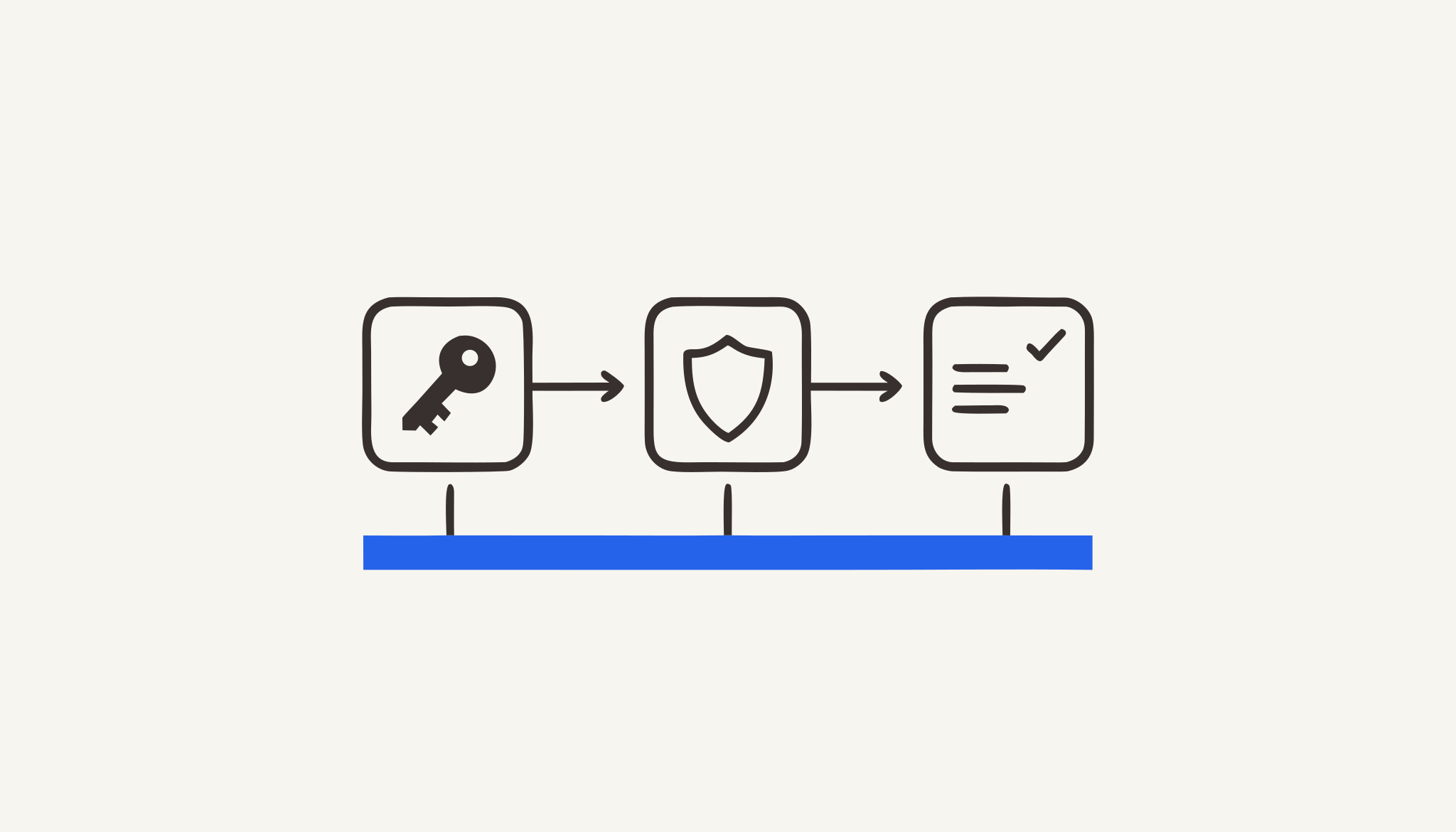
A person signs in with OAuth. An unattended agent gets its own scoped key. One identity per agent, so revoking one never takes down the rest.
Roles are named after the work, not the person doing it. Change who holds the job and the access follows the role rather than being rebuilt by hand.
The grant is on the tool, never on the connector. Deny by default, checked on the tool name, and applied before discovery so a blocked tool is never even listed.
That last distinction is the one that matters in practice. "Can use M-Pesa" is not a permission, because it would hand out payment initiation alongside balance reporting. Build an agent, end to end ↗
From question to governed action.
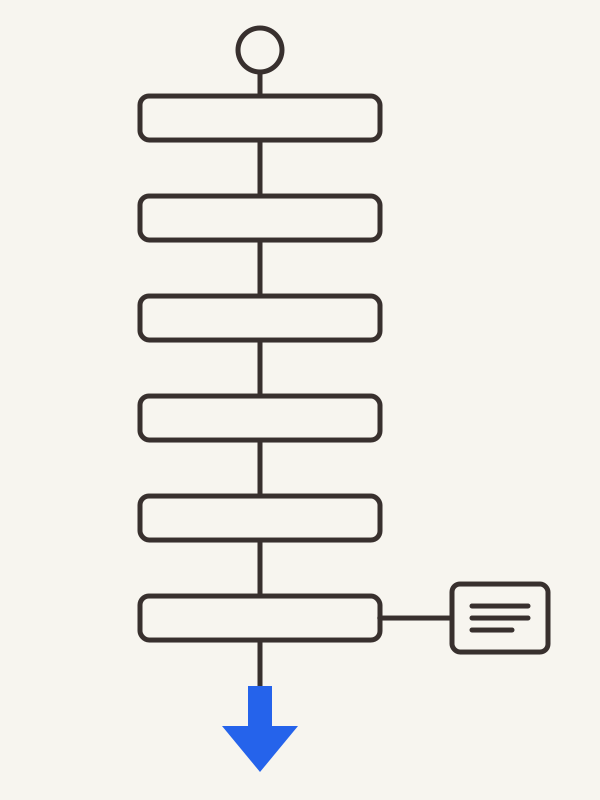
Every request passes through six checkpoints before it touches your data. Then the answer is stripped of secrets and logged.
Verify the AI agent, user, and API key before anything else.
Scope the request to one tenant, one set of credentials, one policy.
RBAC and entitlements decide which tools the request can call.
Payloads are scanned for prompt-injection and manipulation patterns.
The connector calls your system using decrypted, memory-only credentials.
Secrets are stripped and the call is written to an immutable log.
Read how it actually works.
No gated PDF. No sales call. The whole platform is documented in public, including what is on the roadmap and what has not shipped yet.
The access plane and the control plane, and what lives in each.
Read ↗ The MCP gatewayTransport, sessions, tool discovery, injection scanning, secret stripping.
Read ↗ Connectors & toolsWhat a connector is, what a tool is, and the full catalogue.
Read ↗ Tenants & API keysIsolation at the credential, the container and the database row.
Read ↗ Deployment modelsManaged cloud, private instance, or fully inside your own network.
Read ↗ Build an agentScope an agent to exactly the tools it needs and prove the denial works.
Read ↗See governed access on your own systems.
Book a 20-minute demo. We will connect one of your systems live and show you the audit trail while we do it.